Pre-LLM Mainstream
GPT-2 / rinna and Deepfake were connected to scripts, live theater, and moving image. Generative AI was still handled as models, data, and implementation rather than a general chat interface.
A record of Daito Manabe's course from 2020 through 2022, connecting machine learning and generative AI to coursework and student production. It spans the moment before LLMs became a mainstream social interface and continues into the era when GPT-derived tools, Deepfake workflows, VQGAN+CLIP, NFTs, Stable Diffusion, Midjourney, and ChatGPT entered creative practice.
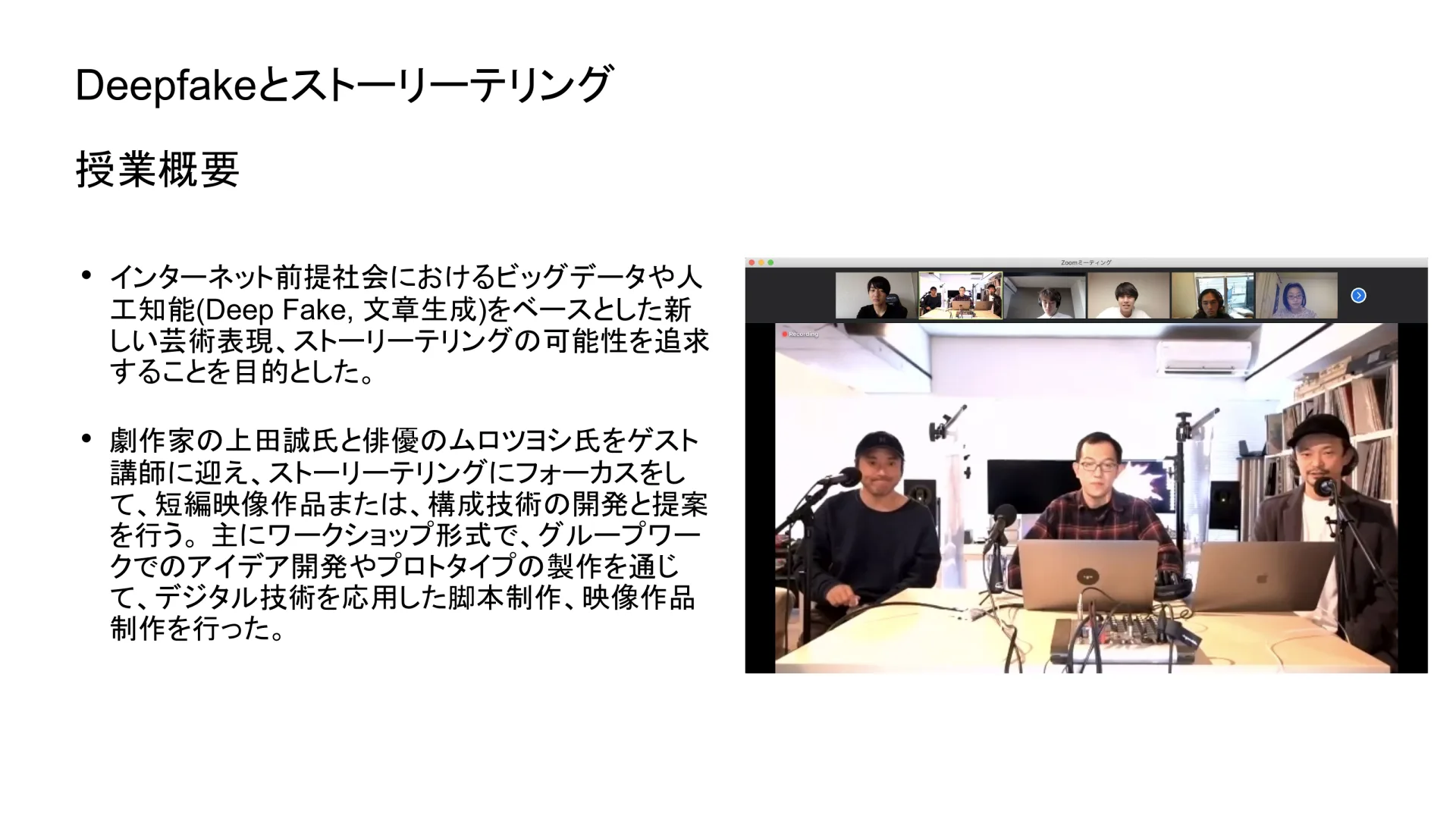
The importance of this material lies in the fact that it preserves a concrete classroom and student-work record from just before generative AI became an everyday application to the point where its interfaces opened to general creative practice.
In 2020, the situation was not yet one in which anyone could use a conversational LLM in a browser. GPT-3 had started to change expectations around large language models, but the practical materials available in coursework were closer to GPT-2-based Japanese models such as rinna, DeepFaceLab-style Deepfake tools, live chat systems, and video editing pipelines.
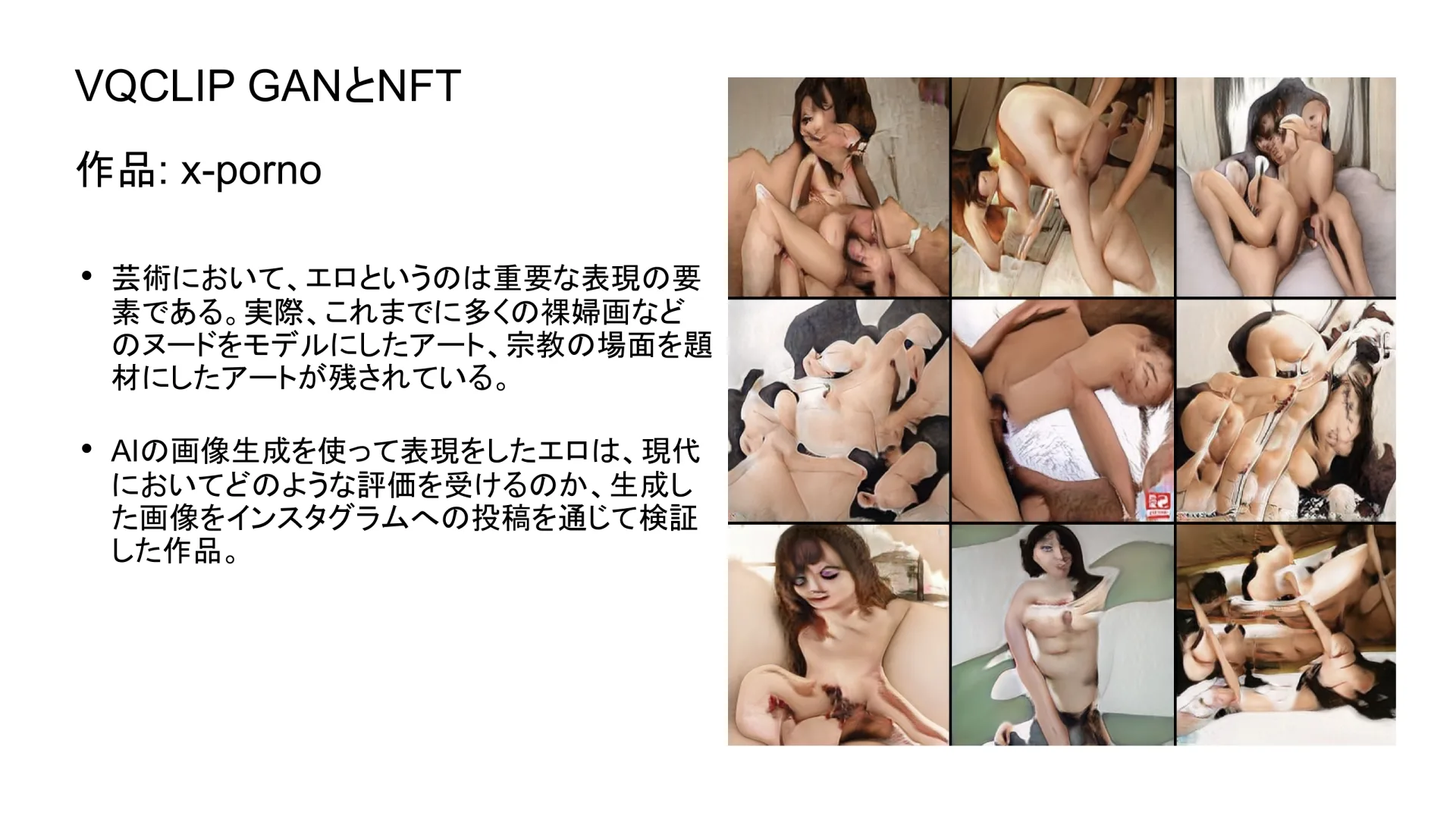
In 2021, Colab-based text-to-image workflows such as VQGAN+CLIP made prompts, generated images, NFTs, and social-platform moderation part of the same artistic problem. Before image generation became a convenient production tool, the course treated it as a way to question value, ownership, national imagery, erotic imagery, and platform judgment.
In 2022, the public release of Stable Diffusion, the spread of Midjourney, and the arrival of ChatGPT at the end of the year moved generative AI from research and experimental workflows toward general creative environments. This page records how machine-learning-based art education framed that transition and turned tools into subject matter.
GPT-2 / rinna and Deepfake were connected to scripts, live theater, and moving image. Generative AI was still handled as models, data, and implementation rather than a general chat interface.
VQGAN+CLIP, NFTs, and Instagram moderation were treated together. Prompt-based image generation became a method for questioning markets, national representation, and platform decisions.
The course crossed into the period of Stable Diffusion, Midjourney, and ChatGPT, as generative AI moved from specialist experiments to tools accessible to general creators.
The course asked how big data and artificial intelligence in an internet-native society could be connected to storytelling, moving image, image generation, markets, and instrument-based expression.
Each year placed a newly socialized generative technology inside real production constraints, testing expression, ethics, markets, and viewing experience at the same time.
In 2020, the program used Deepfake and GPT-2 / rinna to examine generated, disrupted, and reconstructed storytelling through live chat, theater, lip-sync, and romance-driven narrative. Playwright Makoto Ueda and actor Tsuyoshi Muro joined as guest lecturers, and students developed short film works or proposed compositional techniques through workshops.
In 2021, the focus shifted to VQGAN+CLIP, covering text-to-image generation, conversion of generated images into 3D objects, NFT minting, and platform moderation on Instagram. Image generation was treated not only as material production, but as a problem spanning products, national imagery, erotic imagery, and platform judgment.
In 2022, the program focused on Stable Diffusion. Yuya Hanai from Rhizomatiks Research introduced past machine-learning projects and technical context around AI VTuber Eilan Mitsua, while the student works examined the value of images and the expansion of instrument-based expression.
The three annual themes are organized according to the source slide structure.


The works shown in the source slides are reorganized by intention and production method.
A work in which GPT-2-generated chat messages were sent into a YouTube Live theater performance and mixed with messages from human viewers.
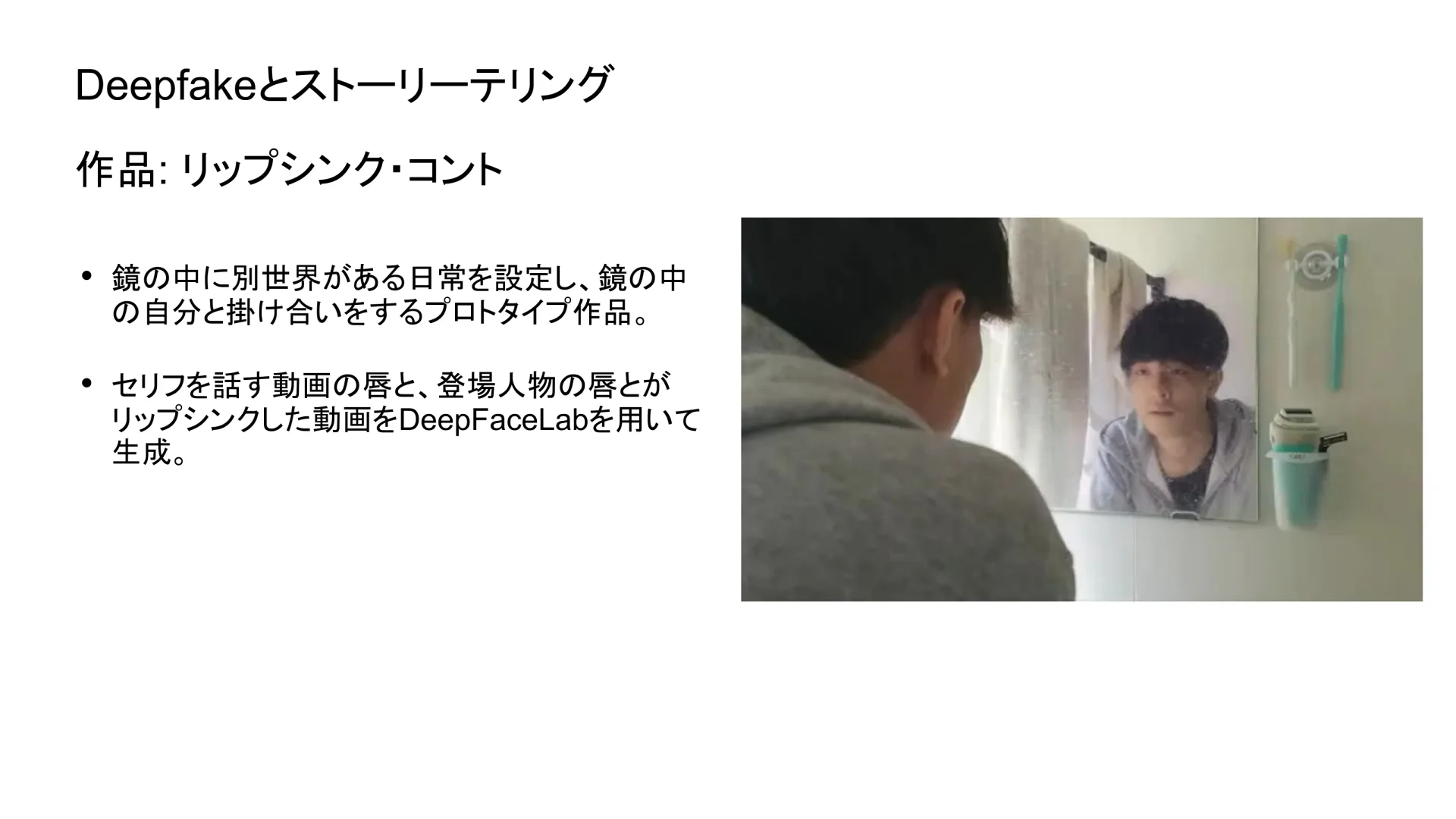
A prototype set in an everyday scene where another world exists inside a mirror, and the performer talks with another version of himself inside it.

A film work that expresses a world where Deepfake is used in daily life through a story of romance and self-transformation.

A work that generates product images from arbitrary product names, turns them into 3D objects, and makes them usable in a virtual reality space.

A video work that uses national anthem lyrics as VQGAN+CLIP input and watches images being generated in time with the anthem.

A work that tested how erotic images made with AI image generation would be evaluated today by posting them to Instagram.

A work that reflects on the future value of images in an era when anyone can generate and modify high-resolution images from text.
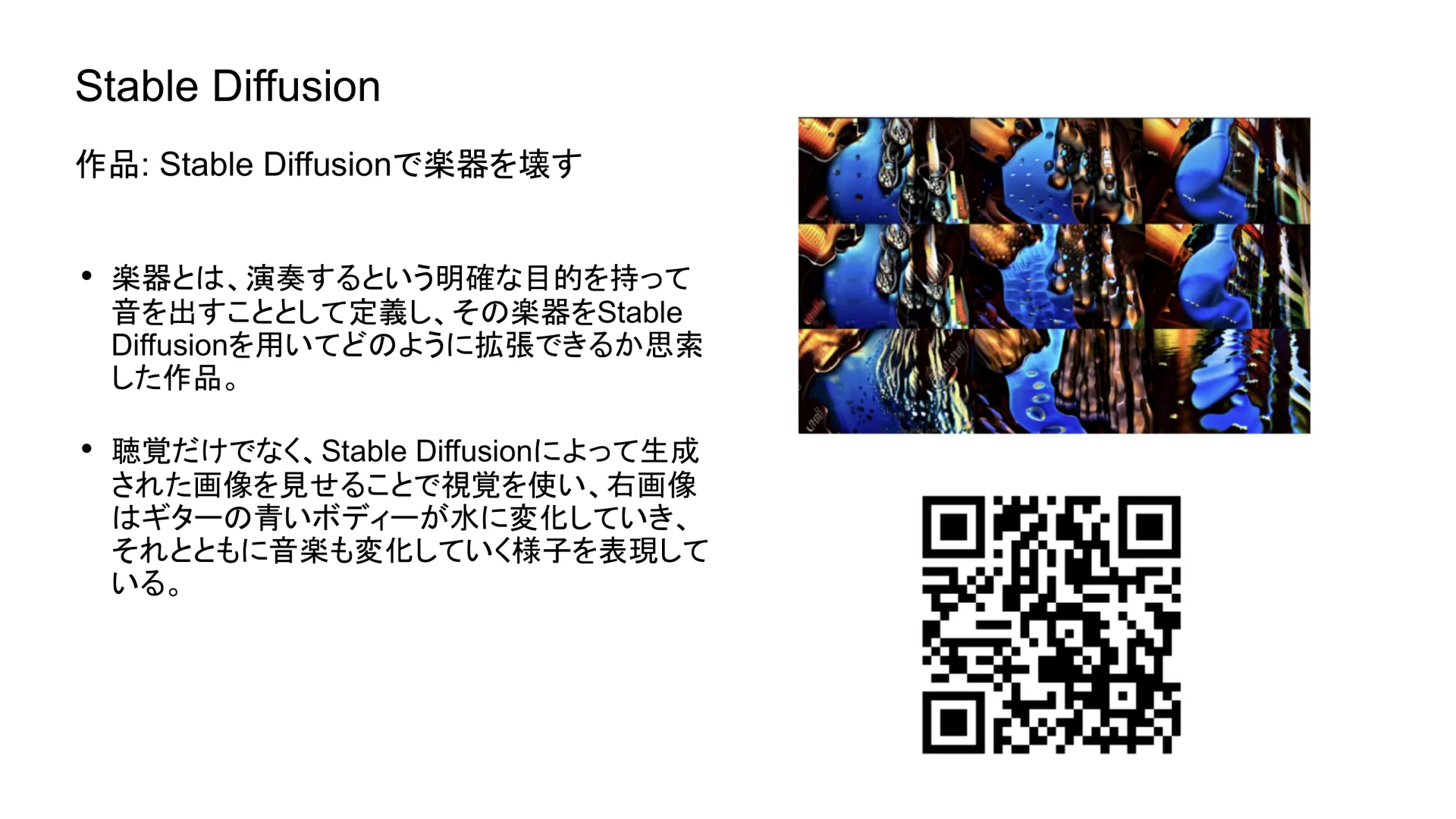
A work that defines an instrument as a device for intentionally producing sound through performance, then asks how Stable Diffusion can expand that definition.
The YouTube Live link for In-Pression from the source slides is preserved here as an embedded video.
The original Google Slides, PDF, and PPTX are not placed inside the public route. All 27 pages are preserved as optimized display WebP files, including course overviews, diagrams, screenshots, and the QR-code slide.


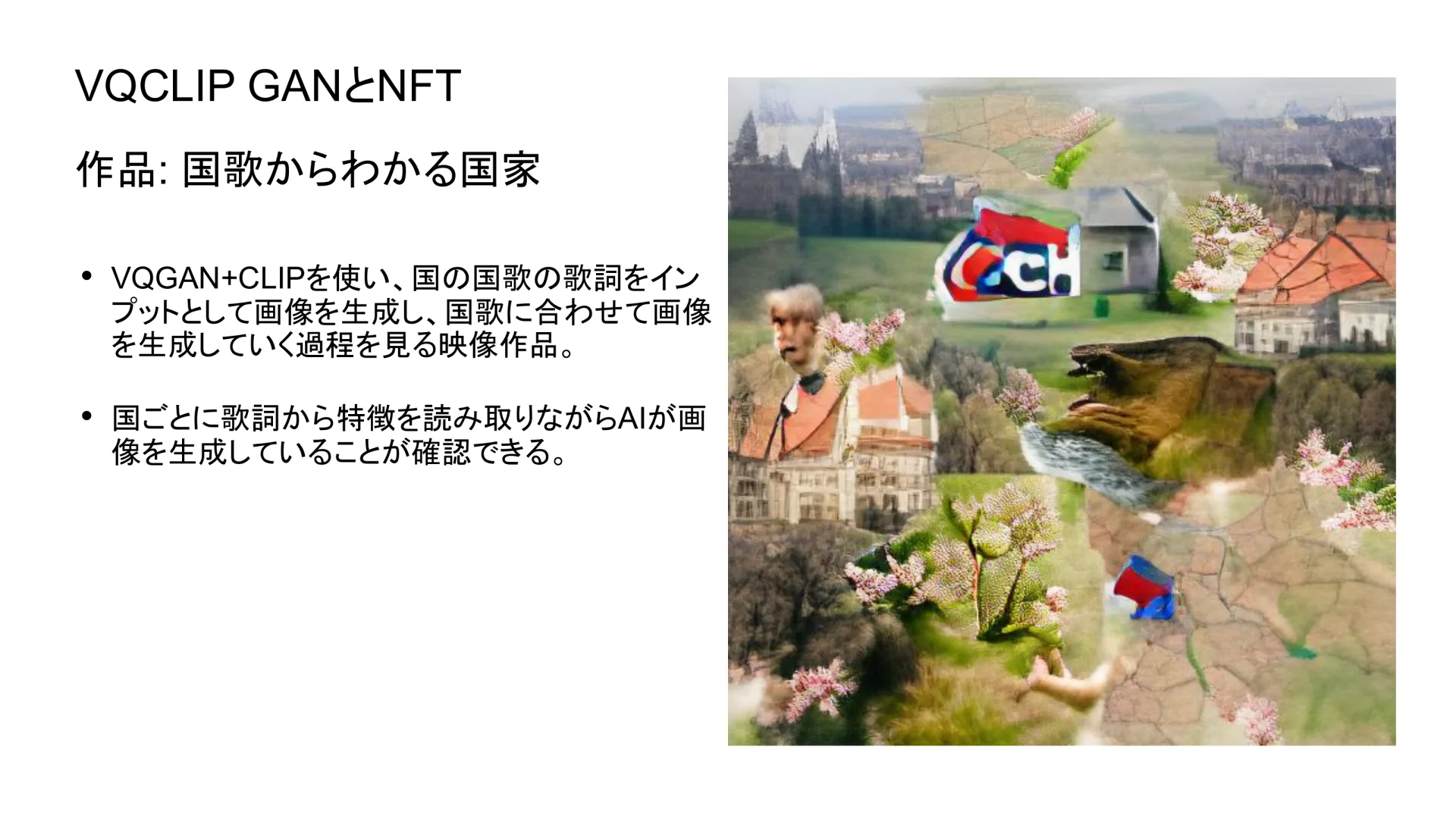


The raw Google Slides, PDF, and PPTX are kept outside the public Selected Works route. The public page contains only optimized display images, structured text, and the video embed.
People and guest information visible in the source slides.
Open the FAQ, glossary, authority, measurement, and AI index pages. Each link now states what it is for.