norm art & design festival 2022
https://norm.world/
Technology
Home Sync Light
LED robot
Hardware
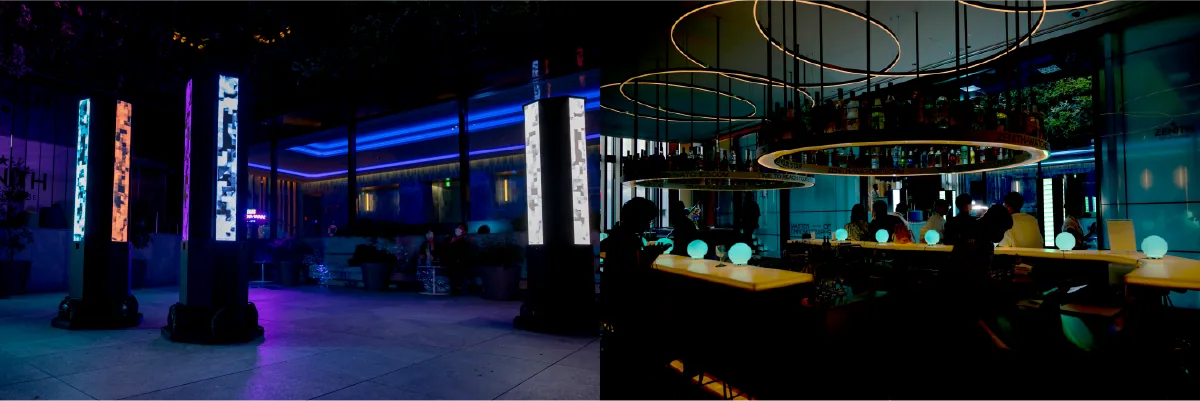
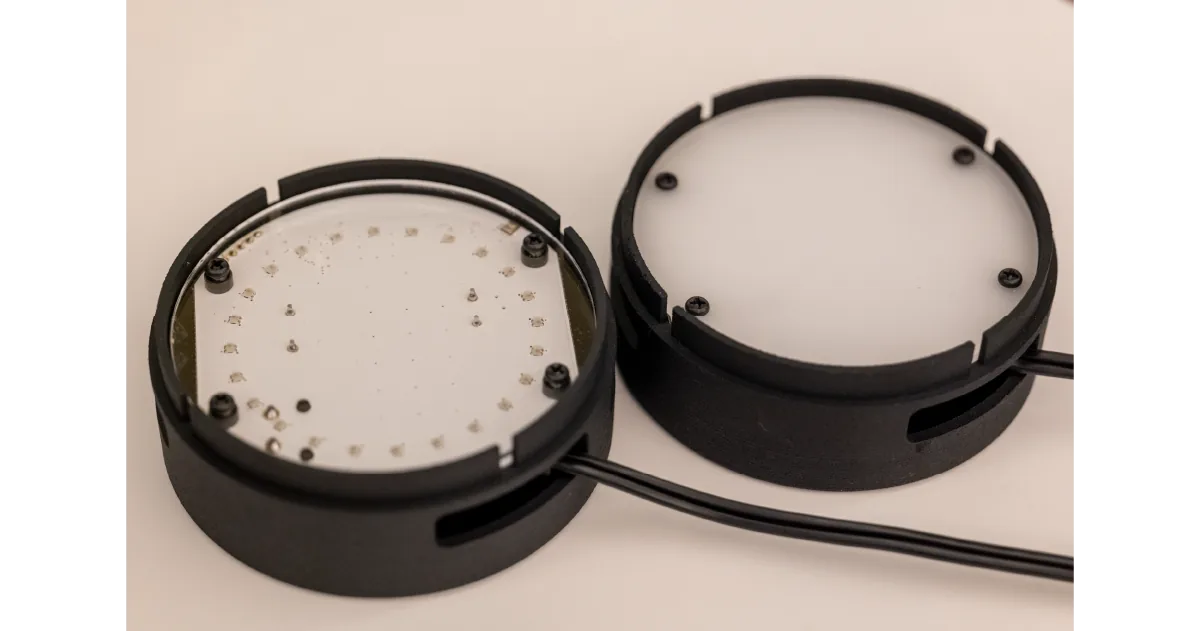
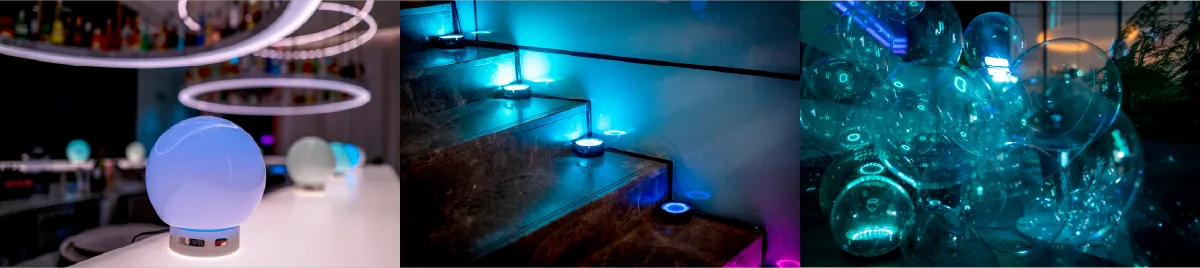
Light device designed specifically for this installation. Three types were created to be enjoyed with various installation methods: lamp shade type, flat light type, and transparent bubble balloon type. The electronic circuits and housing that serve as the base are common, with variations achieved through placement and decoration. Additionally, an AC/DC converter is built in, allowing it to be used by simply connecting it to a standard household power outlet.
Software
Audio watermarking technology implements two types: one linked to the timecode of the music for synchronization, and a command type for realizing real-time light effects. On the light device side, light patterns stored in built-in memory are played back in sync with the timecode, and effects that react to commands are synthesized in real-time to illuminate the LEDs.
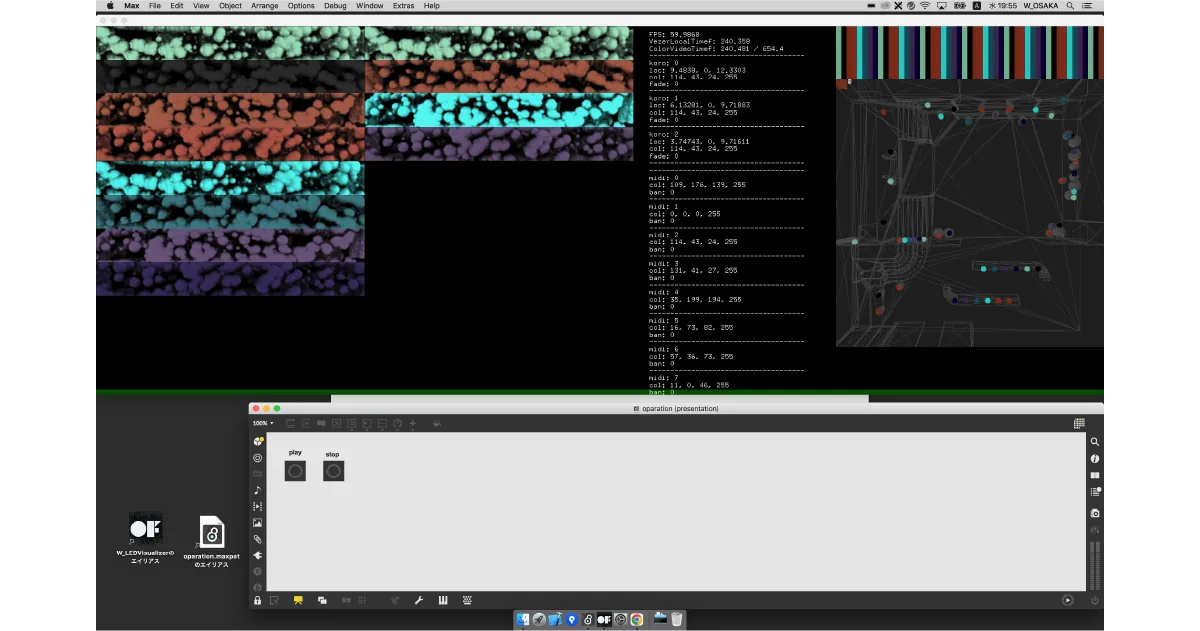
For light pattern generation, a system was developed that generates lighting patterns using MIDI data, which musicians and sound designers find easiest to work with.
- MIDI Control Data for controlling lighting effects
- MIDI Note for controlling color and brightness (DMX)
- Max, oF simulator creation
Autonomous Mobile Robot
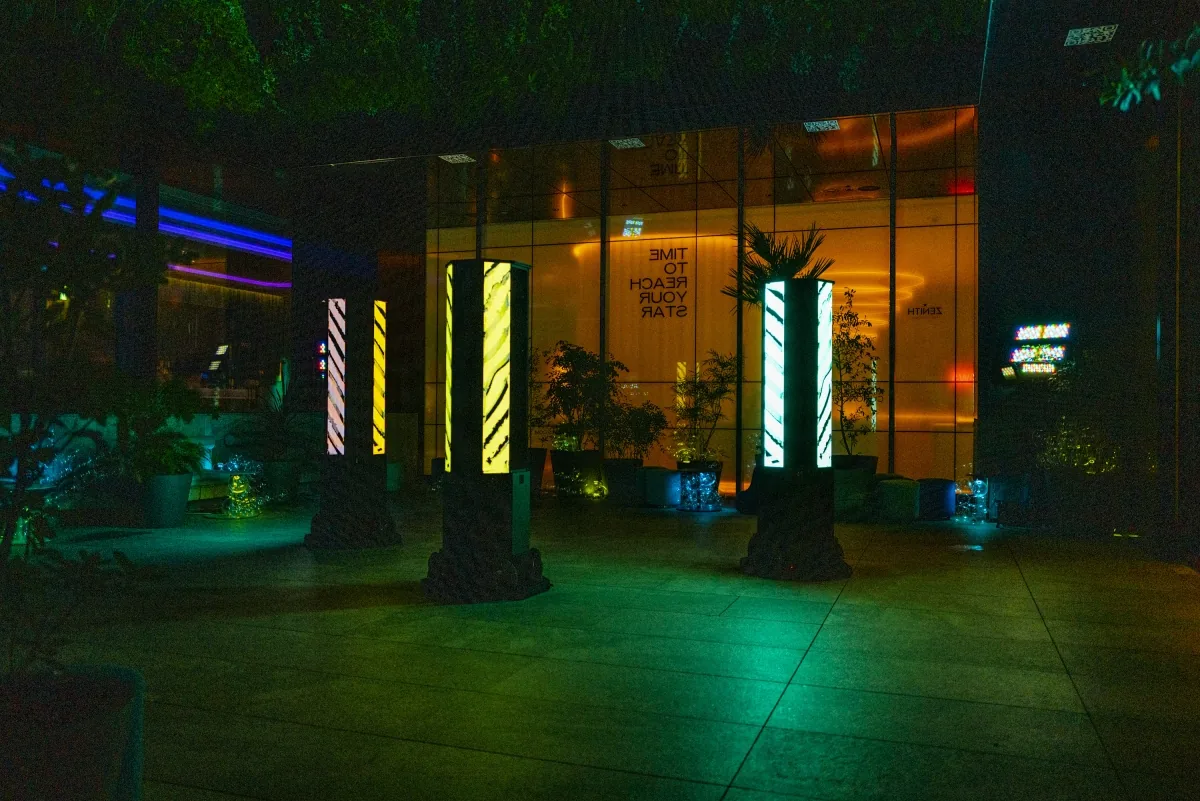
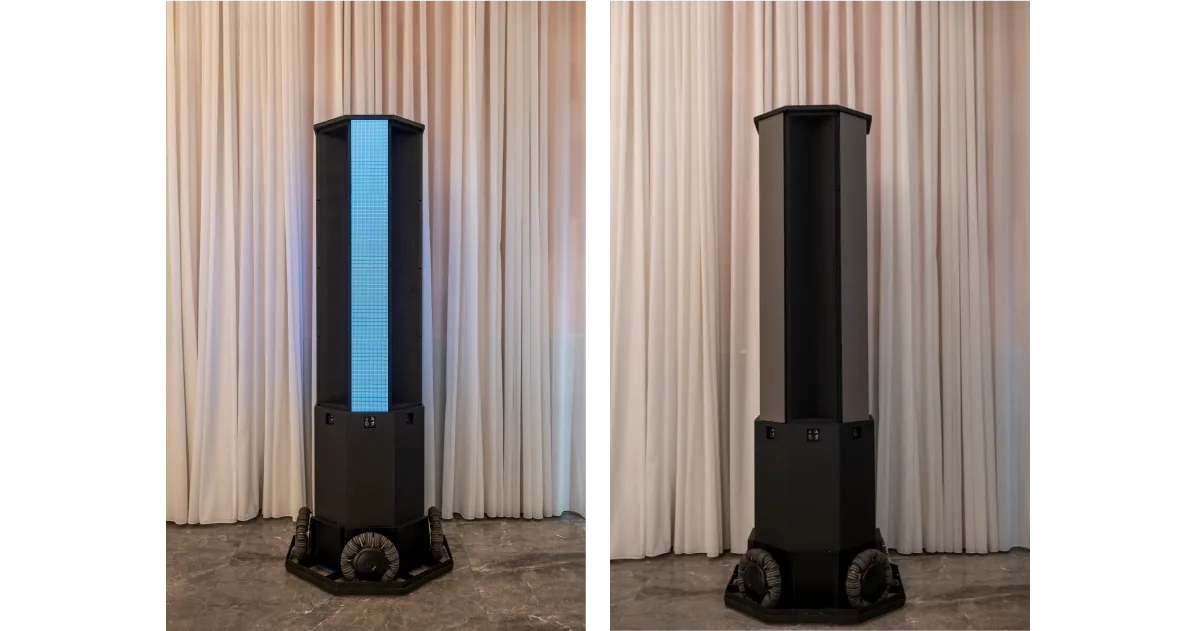
An autonomous mobile robot equipped with omni-wheels was fitted with LED displays on all four sides. The LED displays adopt high-definition 2.5mm pitch panels. With wheels that enable omnidirectional movement, the robot's movements within the area and constantly changing visual presentations can be viewed from any angle.
Software
・Autonomous driving control system
Each LED robot is equipped with a self-positioning system that does not rely on external measurement, integrating estimation of its own traveling speed, distance measurement from surrounding objects, and environmental feature detection via optical camera, as well as an autonomous driving system. This allows autonomous operation within a preset drivable area without colliding with installed objects or spectators.
In "exploration mode," the robot interactively changes course in response to the approach of other units or spectators, freely moving around the area. As a result, the robot arrangement in the venue randomly reconfigures, presenting diverse appearances.
In "position command mode," the LED robot autonomously moves toward designated coordinates. Using this mode enables performances following trajectories (choreography) designed to synchronize with sound and lighting.
・Visual system
HomeSyncLight's light color, flashing, and LED robot's detection of people cause changes in the LED visuals. Changes and control of the LED robot's running patterns matched to sound and lighting are also performed by this system.
Description