System
A custom HFT system rewritten from Java to C++
Developed with access support from QUICK and optimized over roughly six months for audiovisual translation.
High-speed stock trading, the pre-regulation Bitcoin market, and the speculative frenzy around NFTs. Manabe and Rhizomatiks' financial works exposed the short delay between technical implementation and legal response, translating that gap into sound, moving image, trading systems, and data visualization.


These works began from Manabe's interest in automation before "AI" became a common term. They use high-frequency trading as an already deployed symbol of human activity being replaced by algorithms.
In 2013, Daito Manabe was focused on the social shift in which more and more human activity was being automated and replaced by artificial intelligence. The language of the time was less about consumer AI and more about automation, artificial intelligence, and algorithmic systems.
One practical motif was stock-market automated trading, especially High Frequency Trading. HFT operates beyond human reaction time, using orders, cancellations, and re-orders to treat the order book itself as a material system. Manabe focused on the overlap between speed, privileged network access, and regulatory lag.
These projects do more than visualize finance. The trading system, audience interface, dedicated line, market data, administrative guidance, and later legal reforms all sit inside the same artistic frame.
Developed with access support from QUICK and optimized over roughly six months for audiovisual translation.
Audience iPad game data was designed to feed into automated trading parameters.
After warnings that the work could be interpreted as spreading rumors or market manipulation, the live trading plan was withdrawn.
Stock markets, Bitcoin, flash crashes, and the NFT bubble. The related works treat markets not only as streams of data, but also as places where regulatory delay and speculative heat become visible.
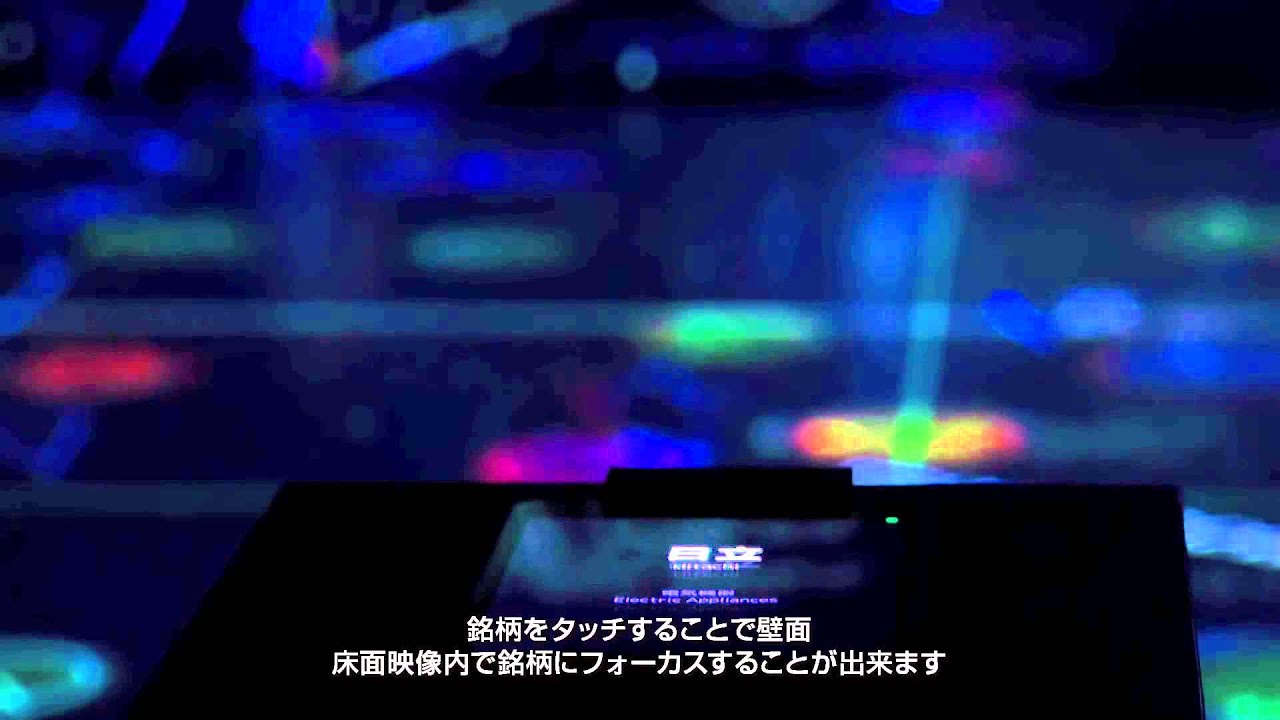
In 2013, Manabe planned to exhibit an automated stock-trading system as an artwork at the Museum of Contemporary Art Tokyo. The work focused on the privileged access surrounding HFT infrastructure and on how repeated high-speed orders and cancellations could disturb the market order book.
With special permission to use a QUICK line, Manabe rewrote a Java system in C++ and built a custom HFT system optimized for visualization and sonification. The exhibition plan was to trade in the real market with 3 million yen and convert the movement of those trades into sound and image.
Presented in Karlsruhe in 2016, chains worked with Bitcoin automated trading and blockchain visualization. At that time, Japan's registration system for crypto-asset exchange businesses had not yet begun, and crypto markets were far less institutionalized than stock markets.
Manabe translated the unrealized HFT structure from the Tokyo Stock Exchange work into the Bitcoin market. The project ran simple arbitrage and multiple automated trading algorithms while also displaying the transaction structure of Bitcoin.
The 2018 version by Daito Manabe + You Tanaka + Kenichiro Shimizu + Shogo Kawata (GORAKU) + Takao Inoue generated sound and image from financial data recorded on October 7, 2016.
At 8:04 a.m. on Friday, October 7, 2016, GBP/USD suddenly fell. The episode was discussed through possible explanations including fat-finger error, algorithmic trading, and HFT chain reactions, but no single decisive cause was established.
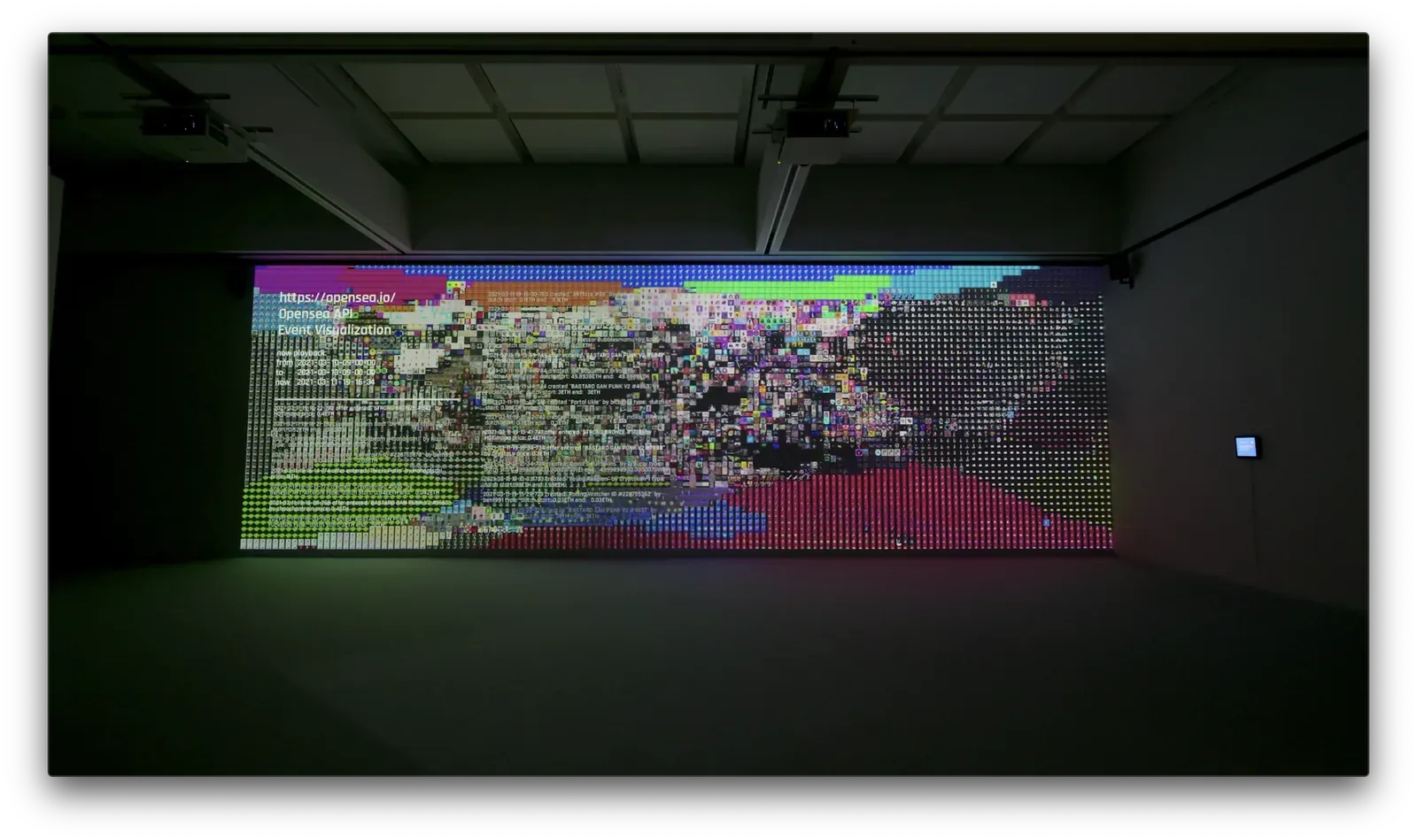
"Gold Rush" - Visualization + Sonification of Opensea activity is an NFT-related work by Daito Manabe presented under the Rhizomatiks name. It uses OpenSea event data from the day before and after 10 a.m. EST on March 11, 2021, when MetaKovan purchased Beeple's NFT at Christie's for $69,346,250.
The work reflects on the moment when CryptoArt and NFT Art rapidly crossed into the art world, using machine learning techniques including Convolutional Neural Network and t-SNE, together with data visualization and sound. The NFT bubble itself becomes the subject: proof of ownership, scarcity, speculation, and market expansion all appear as one data field.
The point of these works was not to perform illegal trades, but to make the time lag between technology and regulation perceptible. This section is a historical framing for the artwork, not legal advice.
Spoofing itself falls under market-manipulation rules in Japan's Financial Instruments and Exchange Act. In 2013, however, the specific registration and supervisory framework for HFT operators, co-location, dedicated lines, and algorithmic strategies had not yet been fully established. Manabe's work treated that delay and privileged access as artistic material.
Under the 2017 amendment to the Financial Instruments and Exchange Act, Japan introduced a registration system for those conducting high-speed trading in stocks and other instruments from April 1, 2018. Trading strategy, system management, order records, transaction records, and reporting to authorities became part of the framework.
The Bitcoin market addressed by chains was already socially implemented, but exchange-business registration and market surveillance were not yet organized in the way they are today. The work exposed this gap through blockchain structure and automated trading.
Japan's registration system for crypto-asset exchange businesses began on April 1, 2017. Later reforms effective May 1, 2020 changed the legal term from "virtual currency" to "crypto asset" and introduced rules addressing unfair transactions such as price manipulation. In the 2020s, market surveillance, trade review, and supervision of registered businesses have continued to strengthen.
Gold Rush treats NFTs both as a technical story of hard-to-forge ownership proof and as a speculative rush accelerated by the Beeple auction. By using OpenSea event data, the work makes market movement, price, attention, liquidity, and participant behavior visible alongside the artwork itself.
The 2013 stock-trading work, the 2016 Bitcoin work, and the 2021 NFT work all targeted areas where law and institutions had not yet caught up with technology. Rather than treating markets as abstract numbers, they placed live trading, market data, audience input, network privilege, administrative judgment, and speculative frenzy inside one frame.
These works can be read as artful hacking of a social time lag. They document the moment when code, cables, regulation, bodies, and audience interaction all became part of the market.
Primary credits and reference links for the works.
This page references the project videos, Rhizomatiks/ZKM work pages, and public documents from Japan's FSA, JPX, CFTC/SEC, and Bank Underground.
Open the FAQ, glossary, authority, measurement, and AI index pages. Each link now states what it is for.